
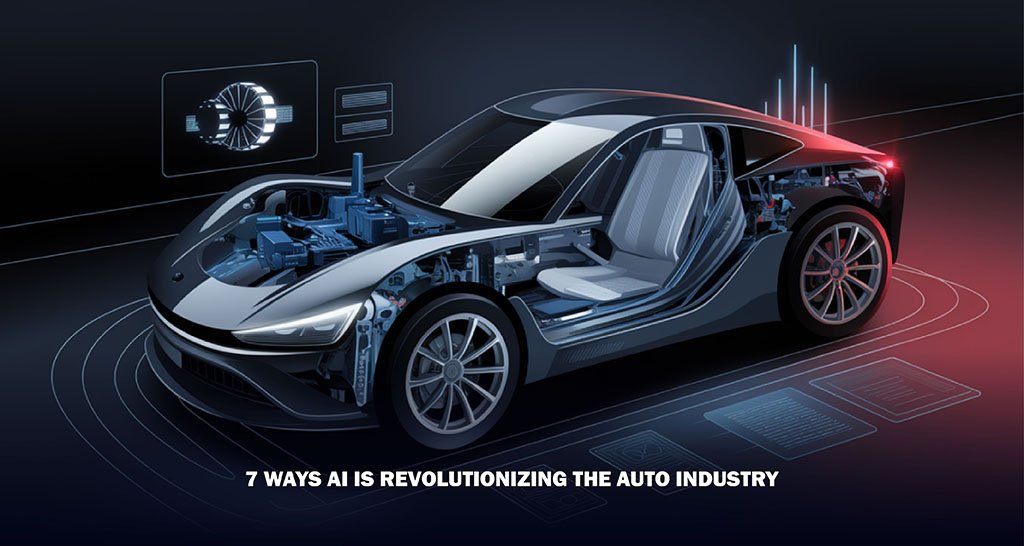
Artificial Intelligence (AI) is significantly altering various industries, with the automotive sector being no exception. Innovations such as autonomous vehicles and predictive maintenance are redefining the processes of vehicle design, production, and utilization. This article will examine seven distinct ways in which AI is transforming the automotive industry.
Self-Driving Technology
The emergence of autonomous or self-driving vehicles represents one of the most thrilling advancements in the automotive industry. At the core of these vehicles are artificial intelligence systems, notably machine learning and computer vision. These technologies enable cars to analyze data from cameras, sensors, and radars, facilitating real-time decision-making for tasks such as obstacle detection, traffic navigation, and passenger safety assurance. Major companies, including Tesla and Waymo, along with other leading automotive manufacturers, are making substantial investments in this technology, aiming to decrease accident rates, enhance traffic efficiency, and offer a more convenient driving experience.
Predictive Maintenance
The integration of AI-driven predictive maintenance is transforming the management of vehicle maintenance. By employing AI algorithms to scrutinize data collected from a vehicle’s sensors, manufacturers can identify potential problems prior to their escalation into significant failures. This proactive approach not only mitigates the risk of expensive repairs but also extends the overall lifespan of the vehicle. AI technologies can forecast the likelihood of component failures, such as those affecting the engine, transmission, or brakes, by analyzing both real-time data and historical patterns.
Enhanced In-Car Experience
Artificial intelligence is significantly improving the in-vehicle experience through the implementation of intelligent assistants, tailored features, and advanced voice recognition technologies. Virtual assistants such as Apple’s Siri, Google Assistant, and Amazon’s Alexa have been incorporated into numerous contemporary automobiles, enabling drivers to manage navigation, music, climate controls, and phone functionalities using voice commands. These systems are continually evolving with advancements in natural language processing, facilitating more seamless interactions between drivers and their vehicles.
Supply Chain Optimization
Artificial intelligence significantly enhances the efficiency of manufacturing and supply chain management in the automotive sector. Systems driven by AI are capable of forecasting demand, optimizing inventory levels, and mitigating the risk of parts shortages, thereby reducing production delays. These advanced systems process extensive data throughout the supply chain to refine logistics, assess supplier performance, and enhance the overall manufacturing workflow.
Advanced Safety Features
Artificial intelligence is greatly enhancing vehicle safety by means of technologies such as advanced driver assistance systems (ADAS). These systems leverage AI to provide functionalities including lane-keeping assistance, automatic emergency braking, adaptive cruise control, and parking support. The AI algorithms analyze data from multiple sensors and cameras to identify potential hazards in the vehicle’s surroundings, thus minimizing the likelihood of accidents. Ongoing advancements in these AI-based safety systems are anticipated to play a crucial role in decreasing the worldwide incidence of road accidents.
Smart Manufacturing
AI is optimizing automotive manufacturing through advancements in robotic automation and quality assurance. In numerous contemporary automobile production facilities, robots powered by AI undertake various functions, including welding, painting, assembly, and inspection. These robots leverage machine learning to enhance their accuracy progressively. Furthermore, AI plays a crucial role in quality control by examining images and sensor data to detect defects on the assembly line with remarkable precision. This degree of automation and accuracy leads to superior product quality, reduced production expenses, and accelerated manufacturing processes.
Autonomous Delivery Vehicles
Artificial intelligence is increasingly essential in shaping the future of autonomous delivery vehicles. As e-commerce continues to expand, the demand for effective last-mile delivery solutions is surging. Autonomous delivery vehicles, driven by AI technology, offer companies such as Amazon and Uber the capability to transport goods efficiently without the need for human drivers. AI facilitates the navigation of intricate urban landscapes, optimizes route planning, and enhances obstacle avoidance for these vehicles.
In summary, artificial intelligence is transforming the automotive industry in various aspects, including autonomous driving technologies and advancements in manufacturing and supply chain processes. As AI progresses, we can anticipate further innovations that will improve safety, convenience, and efficiency within the automotive field.