
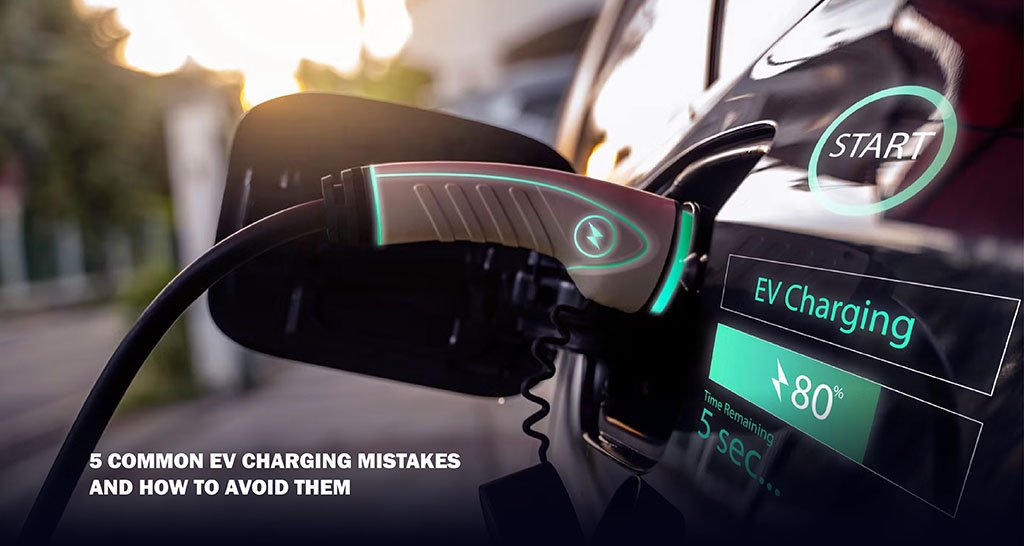
As the popularity of electric vehicles (EVs) continues to rise, an increasing number of drivers are transitioning from conventional gasoline-powered cars to environmentally friendly alternatives. Although EVs present various advantages, such as lower carbon emissions and savings on fuel costs, the charging process can pose challenges for those who are new to this technology. Errors made during charging can result in inefficiencies, potential battery damage, or safety concerns. Below are five prevalent mistakes associated with EV charging and recommendations for avoiding them.
- Charging to cent percent All the Time
Numerous electric vehicle (EV) owners believe that their vehicle’s battery should be fully charged on each occasion; however, this is not the most advisable practice. Lithium-ion batteries, which are typically utilized in EVs, generally have a longer lifespan when maintained within a charge range of 20 percent to 80 percent. Frequently charging to full capacity can lead to accelerated degradation of the battery over time.
How to Avoid It: It is advisable to refrain from charging your electric vehicle (EV) to its full capacity unless you are preparing for an extended journey. It is recommended to adjust your vehicle’s charging settings to halt at approximately 80-90 percent, reserving a full charge for situations that require it. Numerous EV models are equipped with a feature that allows you to set a maximum charge limit, thereby contributing to the enhancement of battery lifespan.
- Leaving the Vehicle Plugged in for Too Long After It is Fully Charged
When your electric vehicle (EV) is completely charged, keeping it connected to the charger may result in unnecessary battery degradation. While contemporary EVs are engineered to manage this situation, consistently leaving your vehicle plugged in after it attains a full charge can lead to heat accumulation, potentially harming the battery in the long run.
How to Avoid It: Disconnect your vehicle from the charging station immediately after it reaches a full charge. If your charging station is equipped with a timer or a scheduled charging function, it may be beneficial to configure it to cease charging automatically once the battery is fully charged. Furthermore, numerous electric vehicles provide notifications upon the completion of charging, allowing you to unplug them in a timely manner.
- Using the Wrong Charger for the Job
Not all electric vehicle chargers are the same. There are three main categories of EV chargers: Level 1, which utilizes standard household outlets; Level 2, which operates at 240 volts; and DC fast chargers. Selecting an inappropriate charger for your requirements may lead to either excessively slow charging or an ineffective consumption of your home’s electrical resources.
How to Avoid It: It is important to familiarize yourself with the various charging options at your disposal. For routine commutes, a Level 2 charger installed at home is typically adequate and offers greater efficiency. Level 1 chargers should be reserved for emergency circumstances or when no alternative is available. It is advisable to utilize DC fast chargers primarily for extended journeys, as they provide rapid charging for your battery, although frequent use may adversely affect its longevity.
- Not Charging When It is Convenient
It is a common error among new electric vehicle (EV) owners to wait until their battery is nearly depleted before initiating a charge. Allowing the battery to reach a critically low level before recharging can impose undue strain on the battery, which may ultimately reduce its overall lifespan.
How to Avoid It: It is advisable to charge your electric vehicle (EV) at your convenience, even if the battery is not fully depleted. For optimal convenience and battery longevity, it is recommended to connect the charger when the battery level falls to approximately 20-30 percent. Regularly topping up the charge will not negatively impact the battery and can help prevent unexpected low power situations.
- Ignoring Software Updates and Maintenance
Electric vehicles, like other technologies, necessitate routine software updates and maintenance to maintain peak performance. Certain manufacturers offer updates that enhance charging efficiency, battery management, and various essential features. Neglecting these updates may result in lost opportunities to improve your charging experience.
How to Avoid It: It is essential to routinely verify software updates for your electric vehicle and to implement them without delay. Furthermore, adhere to the maintenance schedule recommended by the manufacturer to maintain the optimal functionality of your vehicle’s charging systems.
By recognizing these prevalent charging errors and adopting measures to prevent them, electric vehicle owners can enhance the longevity of their vehicles, boost efficiency, and lower overall maintenance expenses. Charging an electric vehicle becomes a simple task once one becomes accustomed to it, however, it is essential to be aware of the habits formed and to remain knowledgeable about optimal practices.