
Today, women are leading the business world from entrepreneurs to management to finance; female leaders are at every stage. We have just celebrated International Women’s Day (IWD), a significant global movement to honor women’s accomplishments and promote gender equality.
In this modern era, women are able to efficiently handle their professional success with their personal responsibilities. While moving on their success path, women neglect their physical and mental well-being, which leads to major health issues.
Women’s personal and professional lives are greatly impacted by their health, which is a complex and vital component of total well-being.
In this article, we will be discussing the top health issues of modern women that impact women’s physical and mental well-being from youth to the post-menopausal years.
- Menstrual Health
Menstrual health affects women’s physical, emotional, and mental well-being throughout their menstrual cycle. Menorrhagia (heavy bleeding), dysmenorrhea (painful periods), and PMS (premenstrual syndrome), which refers to the symptoms that women may have in the weeks preceding their period, are common problems. The symptoms that each woman experiences are unique and can change from month to month.
Menstrual health problems can cause discomfort at work, decreased productivity, and absenteeism. Flexible work schedules, access to hygienic supplies, and light work pressure are some easy ways to deal with it.
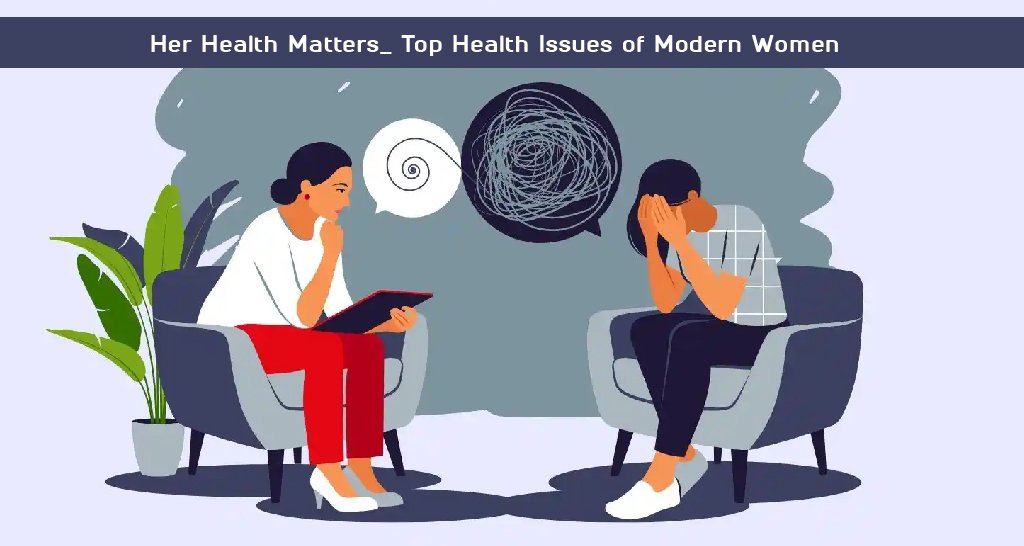
- Mental health
According to the World Health Organization (WHO), women are more likely than males to experience depression, with a lifetime prevalence of roughly 1 in 5 women (20%) compared to 1 in 10 men (10%).
The hormonal changes and social pressures make modern working women more susceptible to stress, anxiety, and depression. Adolescence, pregnancy, and menopause are among the life periods that provide particular mental health difficulties.
Strategies for support
Raise awareness of mental health issues and lessen stigma in the surroundings. Utilize mental health resources, such as stress management courses and counseling services, to overcome mental health issues.
- Heart Health
Stress levels can go high due to the increasing work pressure in professional life, along with family duties. Prolonged stress can harm your heart and raise your risk of developing cardiovascular disorders.
The most effective way to protect your heart’s health includes stress-reduction practices like yoga, meditation, or just taking a regular stroll. Additionally, after you reach a certain age, be checked for cholesterol, which is a significant contributor to declining heart health.
- Chronic Backaches, Shoulder, and Neck Pain
Many women experience persistent back pain because constantly juggling obligations at work and at home. The physical demands of home tasks combined with extended workplace sitting can strain the back muscles, causing pain and discomfort.
Hence, take regular pauses, appropriate backpacks, stretching exercises, and ergonomic changes in your routine to address this problem. Back and shoulder pain can be greatly reduced with a comfortable chair and excellent posture.
- Diabetes
Experts believe that diabetes increases a woman’s risk of heart disease by four times, but it is by no means exclusive to women. Additionally, diabetes-related problems like depression, renal disease, and blindness are more common in women. Pregnancy can cause gestational diabetes, a condition in which your blood sugar levels rise, and other issues arise. To deal with it, working women should include a healthy diet, exercise, blood glucose monitoring, insulin injections, and oral medicine as possible treatments for this condition, which affects at least three out of every 100 women.
- Pregnancy-Related Complications
When we discuss the top health issues of modern women, we cannot miss the pregnancy-related changes that can affect a person’s health, from high blood pressure to iron-deficiency anemia.
“Whether or not you have medical conditions, preconception care is important. Women with high blood pressure or diabetes should have these conditions under the best control when they plan to conceive.” People with high-risk diseases, such as neurological problems and significant cardiac disorders, should talk to their doctor about their care plan.
Getting the right vaccinations and maintaining a healthy diet throughout pregnancy is an effective approach to dealing with it.
Sum Up
These are the top health issues of modern women. The first step to dealing with any health issue is being informed about it. Next, spot early warning signs, and feel comfortable asking for help when you know what to look out for. A modern woman can deal with these issues more effectively by recognizing and addressing the particular health issues. As business owners and company leaders, they can create a more welcoming, effective, and happy workplace for women by implementing supportive policies and procedures that guarantee that female workers feel appreciated, which improves job satisfaction and retention.